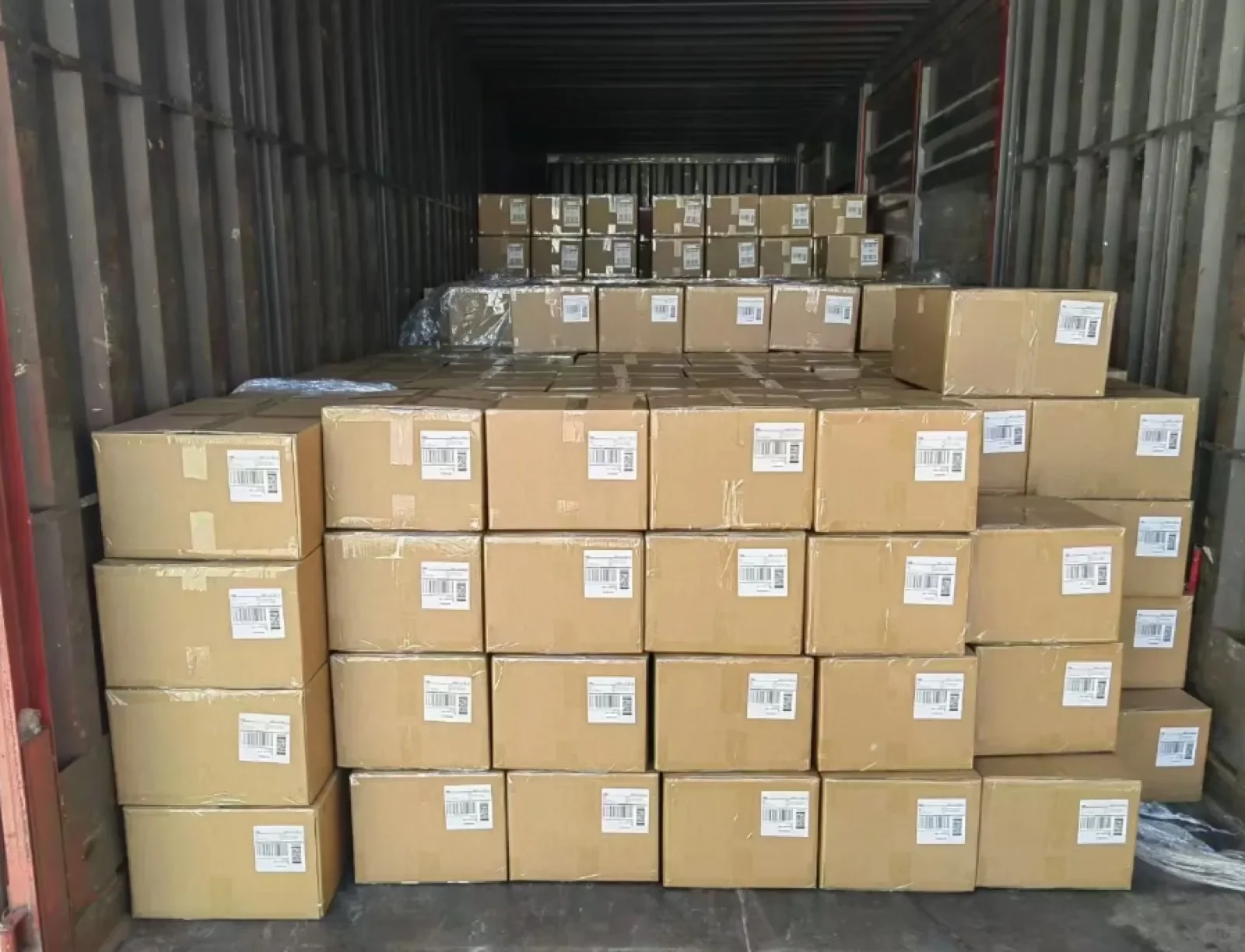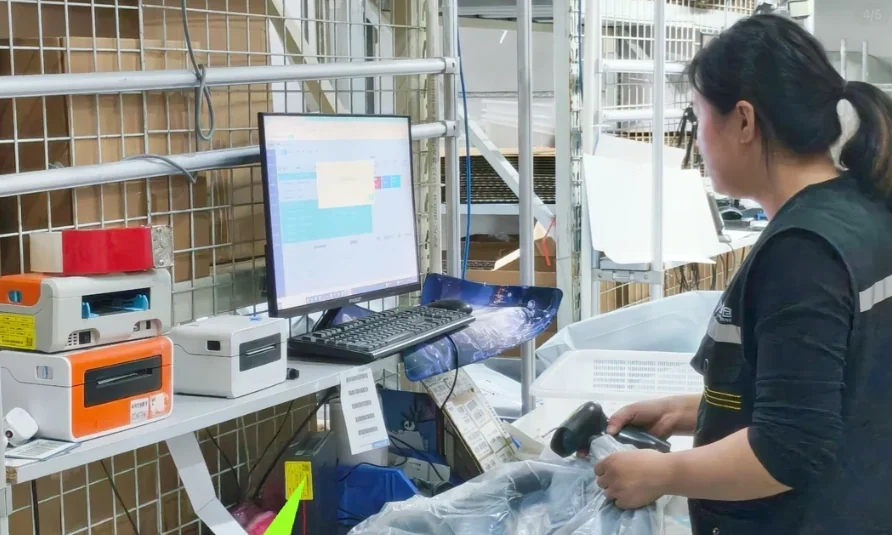
When several factories supply products, boxes and inserts for one bundle, receiving every delivery does not mean the finished sets are ready. Build an assembly brief connecting each component to the final sellable unit before stock arrives in Guangzhou.
Define the complete set
List the finished SKU, variant, component SKUs, quantities per set, packaging materials, approved insert artwork and final product identifier. Keep components, packaging pieces and completed sets in separate stock categories. Obtain current marketplace instructions for the assembled unit and required labels before preparation.
For example, an illustrative kit might require two units of component A, one of B and one gift box. Record that as a recipe, not as three interchangeable product units. A carton containing loose A and B units is not a carton of completed kits.
Find what limits assembly
Use accepted components available for this job, after removing damaged, reserved or uncertain units. For each required component, divide available units by the quantity needed per set and round down. The lowest result is the material limit for complete sets. Check packaging and inserts the same way.
Illustrative availability check
240 accepted A units, 100 accepted B units and 90 approved boxes can support at most 90 sets for the recipe above. That is a material calculation, not a confirmed dispatch quantity: assembly checks, labor readiness and release approval still apply.
Reconcile store bundle availability with warehouse readiness
Shopify calculates bundle availability from component quantities and the number of each component required. Components without inventory tracking, or set to continue selling when out of stock, are excluded from that availability calculation. Review those settings before treating the displayed quantity as a stock constraint.
Shopify bundle inventory considerations, checked October 6, 2026.
The Shopify Bundles documentation says order SKUs represent individual components and inventory availability uses overall stock rather than location-specific bundle stock. Keep a separate facility-level record of accepted components, approved packaging, assembled sets and holds. Test whether the chosen order connection supplies component lines or a finished-set instruction, and approve that mapping before release.
For a pilot, reduce one component’s available quantity, hold one incomplete set and submit one bundle order. Compare the store response with the warehouse’s component allocation and finished-set record. These are proposed acceptance checks, not a claim that a store app manages physical assembly.
Shopify Bundles order and inventory limitations, checked October 6, 2026. Confirm behavior for your actual bundle app and connection.
Approve the packing example
- Identify each component and its position in the set.
- Confirm accessories, inserts, protective materials and packaging version.
- Show the approved final identifier and label placement.
- Agree how the assembled unit stays together during handling.
- Record the approved example and the person who can authorize changes.
Discuss how component identifiers and the finished-set identifier will be checked under current marketplace instructions. Do not print final labels using an unapproved listing or assembly specification.
Choose the checking scope
Agree the check for component identity, quantities, appearance, finished-set completeness and label matching. Specify sampling or full coverage, how sealed units are handled, acceptance criteria and evidence. A weight check may help flag variation, but equal weight does not establish correct component identity.
Reconcile components and completed sets
Record receipts, rejected units, components consumed, completed sets, assembly rejects and remaining components. Separate incomplete work from stock approved for shipment. If a supplier delivery is late, approve a reduced release or revised assembly schedule rather than substituting a component silently.
The component-to-set record can support a conversation with your documentation and customs specialists. It does not establish how invoices or declarations must be prepared; those documents need a separate review of the actual goods and route.
Use a component checklist at the packing station
For a product supplied with accessories, identify each component by approved model or distinguishing features and required quantity. Include the correct instructions or insert artwork version where applicable. Lay out the agreed reference before sealing the finished unit and record the requested completeness checks.
Count loose components separately from assembled units. A weight comparison can flag a difference only within a defined check method; it cannot establish that the correct accessory, model or instruction version is present. If component information labels need review, supply approved artwork and placement instructions for those components as well as the main product.
When missing parts are discovered
Record the affected product, batch, quantity and component. Separate incomplete sets still in the warehouse. Agree replacement-part identity, supplier delivery, assembly and recheck before those sets can be released.
If stock has already left China, identify its actual location and ask the transport party which actions are available. Obtain confirmed receiving and handling arrangements before changing delivery instructions or sending replacement parts. Interception, destination rework and revised marketplace receiving are not assumed available.
Plan discrepancy approval and rechecks · Keep the affected cartons traceable
Give each pack quantity its own assembly instruction
A four-piece pack and a six-piece pack need distinguishable finished-set references, recipes, packing examples and seller-approved identifiers. Keep the loose component SKU separate from each finished-set SKU. Obtain the actual marketplace instructions instead of assuming a listing quantity tells the receiving facility how to assemble the goods.
Illustrative stock movement: 60 accepted single components are assigned to ten four-piece sets, consuming 40 components. The remaining 20 components stay in the component record. If five six-piece sets are also requested, the unallocated components cannot support them without a further approved supply or revised allocation.
Record components allocated, actually consumed, incomplete work, completed sets and rejects separately. Approve the final pack quantity before applying its label. A case containing four loose single products is not automatically one approved four-piece sellable unit.
Historical question: Single units compared with different multipack quantities. This addition defines the physical prep brief; catalog variation rules and barcode eligibility require current marketplace review.
Separate completeness from accessory fit checks.
Allocate shared components across different sets
When two finished-set SKUs use the same component, calculate them against one shared component balance. The maximum quantity for each recipe considered alone cannot be added together as if both recipes have access to all the stock.
Illustrative example: 100 accepted A components are available. SET-X needs two A components and SET-Y needs three. Approving 20 SET-X units reserves 40 A components, leaving 60 for other work. At that point, at most 20 SET-Y units can be allocated from A, subject to every other component and packaging requirement. The separate theoretical limits of 50 SET-X and 33 SET-Y are alternatives, not a combined production plan.
Name the assembly job and reserve its component quantities before another job is approved. Keep physically on-hand quantities separate from free quantities. A reservation changes availability; actual consumption during assembly changes the component balance under the agreed recording method. Do not subtract the same units twice.
Reconcile the assembly job before returning components
Use one line per assembly job, finished-set SKU and component. Record opening job allocations, additional issues, actual consumption, recovered unused components, confirmed rejects and unresolved work in progress. Record completed and held finished sets separately; do not repeat the finished-set quantity on every component line and then sum it.
If a job is reduced or cancelled before assembly, confirm the physical status before releasing its reservation. Components already inside partly assembled packs remain tied to the job until approved recovery is completed and recorded. Removing the customer order from a list does not put those components back into free stock.
Inspect recovered materials within the agreed scope before approving their next use. Report damaged, unidentified or uncertain components separately. A shortage needs a stock explanation or approved adjustment, rather than an invented consumption quantity.
Download the component allocation and assembly record (CSV). Use component rows for material quantities and finished_set rows for completed and held sets. Keep unused row-type fields blank; use unknown for missing required information and 0 only for a confirmed zero.
These are hypothetical planning examples, not measured production results or a promised inventory-system integration. Agree the warehouse method, check scope and approval rules before assembly.
Connect assembly to dispatch
Count completed sellable sets per carton, update the packing list and use the latest approved shipment labels. Measure after final packing in cm and kg. Keep the assembly version, exceptions and release approval with the carton record.
Scope receiving and bundle assembly Review barcode checks
Seller questions behind this guide
These public WeAreSellers discussions informed the topics below. They are individual experiences, not our customer cases or current marketplace requirements. This guide is original planning guidance. Historical fees and workarounds are excluded; handling and records are confirmed in your quote.
Editorial review: 2026-10-06.
WeAreSellers questions informing these controls
These public discussions identify questions to resolve before prep and release. They are individual accounts and supplier perspectives, not proof of inspection performance, certification or our service results. The controls below are original planning guidance and must be scoped for your product.
- Accessory checks in multi-part products
- Missing accessories discovered after dispatch
- Component label omission discovered after export
Reviewed 2026-10-06.