
The change in one paragraph
Until the end of 2025, Amazon would label, bag and wrap FBA inventory for you at the fulfilment centre, for a per-unit fee. From 1 January 2026, that service is no longer offered for shipments created on or after that date. FNSKU labelling, polybagging with suffocation warnings, bubble wrapping, bundling and kitting are all now the seller’s responsibility, and every unit has to arrive ready to stow.
For most sellers this is a workflow change. For sellers sourcing from China it is a decision point, because it forces the question of where the preparation happens — before the crossing, or after it.
What Amazon no longer does for you
| Task | Before 1 Jan 2026 | Now |
|---|---|---|
| FNSKU barcode application | Amazon, for a per-unit fee | You, or your prep provider |
| Polybagging + suffocation warning | Amazon | You |
| Bubble wrap for fragile items | Amazon | You |
| Bundling / multi-pack assembly | Amazon | You |
| Carton and box-ID labelling | Partially | You |
| Fixing a non-compliant carton at receiving | A fee | A rejection, a retrieval, a re-ship |
The last row matters more than the fee rows. Under the old service, sloppy prep cost a per-unit charge. Now a non-compliant carton is a receiving exception you have to solve remotely, on stock that is already sitting in a country you do not have a team in.
Which sellers are most exposed
- Anyone who was using Amazon’s prep service. If your shipment plans previously included a prep line item, nothing about your process now catches label or bagging errors.
- Sellers shipping direct from a factory. Most Chinese factories will apply your FNSKU sticker if you ask, but will not polybag to spec, will not remove the manufacturer barcode they have already printed, and will not verify a scan. Factory “prep” is not prep.
- Multi-supplier bundles. If a set is assembled from three suppliers, someone has to receive all three, check completeness, assemble, and label the finished set. That is now a real work step with a real failure mode.
- Sellers with similar variants. Colour and size variants with near-identical barcodes are where mislabelling quietly destroys inventory accuracy. It was always a risk; it is now an unrecoverable one at receiving.
The pre-2026-shipment compliance checklist
Run this against your current shipment before any stock leaves China.
Unit level
– ☐ Every sellable unit carries one scannable FNSKU, applied flat, on a smooth surface, fully covering the manufacturer barcode
– ☐ Bags are transparent, sealed, correctly sized, and carry a printed suffocation warning if the opening exceeds 5 inches
– ☐ Multi-packs are wrapped or banded as one unit, with one FNSKU and no exposed component barcode
– ☐ Fragile items are protected on the finished packed unit, not on the loose product
– ☐ Retail-ready products are not paying for bags they do not need
Carton level
– ☐ Box weight within limits; team-lift / mech-lift labels where the rules require them
– ☐ Amazon box ID matches the current shipment plan, not an earlier draft of it
– ☐ Carton contents reconcile to the packing list, SKU by SKU
– ☐ Final measured weight and dimensions recorded after prep, before handoff
Process level
– ☐ One approved label file version, named, with older versions separated from the active batch
– ☐ A written approval step for any quantity or condition discrepancy, before stock is prepped rather than after
– ☐ Photo evidence of prepared units and finished cartons, kept against the shipment
Why this pushed the work to China
Once prep is mandatory rather than purchasable, the cheapest place to do it is wherever the goods already are. For China-sourced inventory that is China.
| Prep in Guangzhou | Prep at a US centre | |
|---|---|---|
| Extra freight leg | none — goods are already there | factory port US prep centre |
| Receiving event | one | two (US centre, then Amazon) |
| Fixing a defect found during prep | same city as your suppliers, in days | cross-ocean, in weeks |
| Caught before or after the crossing | before | after |
| Per-unit rate | typically lower | typically higher |
The per-unit rate is the least interesting line in that table. The operational difference is when you find out something is wrong. A quantity mismatch, a missing component, a label that will not scan — solved in Guangzhou, that is a phone call to a supplier. Solved in Ohio, that is a retrieval fee, a storage charge, and a two-week gap in your listing.
This is the same reason a pre-shipment inspection existed before the policy change. What changed is that the penalty for skipping the check went up.
A note on virtual tracking / manufacturer barcodes
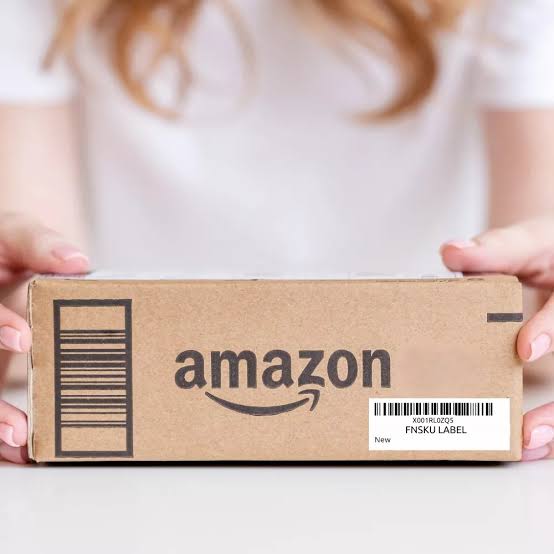
Some sellers have read that manufacturer barcodes can now be used instead of FNSKUs in certain cases. Amazon does operate a virtual-tracking option tied to brand registration and account settings — but it is conditional on your seller account and brand status, not a blanket rule. If you plan to skip FNSKU labelling on the strength of a blog post, confirm it in your own Seller Central shipment flow first, because a whole carton of unlabelled units that turned out to need labels is now a rejection rather than a $0.55 line item.
Verify this against your own account before publishing or acting on it. It is the single most likely place for this article to become wrong as Amazon refines the rollout.
FAQ
When did Amazon stop offering FBA prep and labelling?
Effective 1 January 2026, for shipments created on or after that date. Shipments created before it were still served under the old terms.
Can I still send unprepared inventory to Amazon?
You can send it, but it is not a cost-saving. Non-compliant units are handled at receiving rather than prepared for you, which generally means rejection, retrieval fees, re-prep and re-shipment — plus lost sales while it circulates.
Do factories do FBA prep properly?
Applying a supplied sticker, yes. Polybag sizing, suffocation warning print, old-barcode coverage, bundle assembly and scan verification are the parts that fail, and they are the parts that trigger a receiving exception.
Is a US prep centre a viable alternative?
Yes, and for some sellers it is the right answer — particularly if stock is already in the country or if you want destination-side returns handling. The trade-off is an extra freight leg, an extra receiving fee, and slower correction of defects found during prep.
Does this affect Walmart WFS?
WFS has its own inbound requirements and has never done seller prep in the same way. The two should be prepared against different rules — see our Walmart WFS prep from China guide.